Most Americans replace their mattress every seven to ten years. That’s not a statistic; it’s a cultural habit. We have been conditioned to treat beds like appliances, swapping them out when they start sagging or when a new model arrives with slightly better marketing. We spend thousands on phones we upgrade every two years, but we agonize over mattress purchases as if they are interchangeable furniture.
Here is the uncomfortable truth: the average person will spend roughly 25 years of their life horizontal. That’s a third of your existence, compressed into a rectangle of foam or springs. Yet most of us choose that rectangle with less deliberation than we would apply to a weekend restaurant reservation.
The mattress industry has capitalized on this complacency. Mass-market brands optimize for price points, shipping convenience, and a seven-to-ten-year lifespan. They engineer products that feel acceptable out of the box but degrade predictably, developing body impressions, losing support, and becoming breeding grounds for dust mites and allergens. When those mattresses fail, the solution is simple: buy another one.
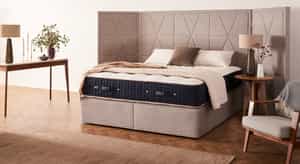
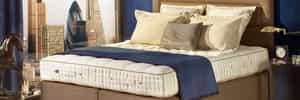
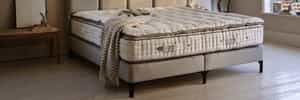
Vispring operates on a different premise entirely. For over a century, its craftspeople in Devon, England, have built mattresses expected to outlive trends, technology cycles, and likely the original purchaser. When you buy a Vispring, you are not buying a mattress. You are buying the last bed you will ever need.
For Manhattanites who value craft over convenience, longevity over novelty, and genuine quality over showroom spectacle, Vispring is not an indulgence. It is the rational choice, one grounded in the materials science that sets it apart.
In 2017 an interior designer working out of a 950-square-foot pre-war loft ordered a Vispring Custom Superb with split firmness and a bespoke length to fit a narrow alcove. Despite the building’s tight stairwell and no-noise rules, setup was seamless. Seven years later, the mattress shows no visible sagging; the horsehair core still lofts, the wool cover remains fresh, and the pocket springs retain their individual response. The designer notes that the bed has become a “design anchor” in the loft, its presence reinforcing the room’s aesthetic rather than competing with it. When asked about resale, they laughed and said the idea of selling it feels odd. It is simply part of the home now, a piece they would consider passing down. This real-world snapshot confirms that Vispring’s heirloom promise holds up amid the everyday realities of Manhattan living.
Maintaining a Vispring is refreshingly simple. Rotate the mattress end to end every three months to even out wear, use a breathable cotton protector to guard against spills, and let it air out for a few hours each season to keep the natural fibers fresh. Unlike many competitors that offer prorated warranties dwindling over time, Vispring provides a thirty-year non-prorated warranty: full coverage for the entire period, regardless of when a claim arises. The Comfort Promise lets you adjust the tension once, free of charge, within the first thirty to ninety days if your initial feel shifts. Together, these policies mean the owner’s risk is minimal; the mattress is built to last, and the company stands behind that promise with little ongoing effort required from you.
A quiet shift is underway in New York’s luxury market: consumers are gravitating toward pieces that can be repaired, reupholstered, or handed down rather than discarded. Vispring’s natural, biodegradable fill and its carbon-neutral pledges place it at the forefront of this movement. As more shoppers seek showroom-based experiences where they can touch, test, and tailor their sleep systems, the demand for venues like the SoHo salon is likely to grow. In this evolving market, Vispring’s blend of heritage craftsmanship, material honesty, and bespoke flexibility positions it not just as a mattress maker, but as a benchmark for the next generation of heirloom bedding.
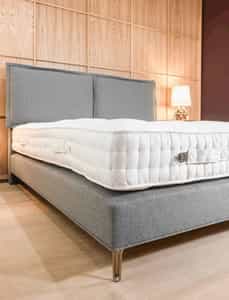
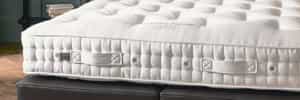
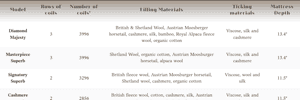
Vispring opened its doors in 1901 in Devon, England, and still handcrafts every mattress at the original factory. The core of each bed combines British fleece wool, cashmere, silk, horsehair, and vanadium pocket springs, materials you will not find in mass-market foams. Wool and horsehair stay resilient, wick moisture, and keep air moving, while engineered foams compress, lose loft, and can off-gas over time. Artisans physically nest each spring row by hand and then tuft the layers, a dying skill that machines simply cannot replicate. This hand-nesting and hand-tufting create a bond between spring and filling that resists sagging and preserves the mattress’s feel for decades. Vispring’s philosophy is clear: they make furniture meant to outlast trends, not disposable products destined for the curb.
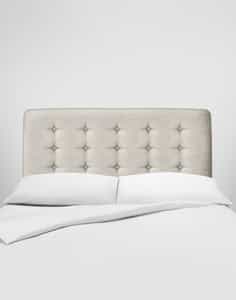
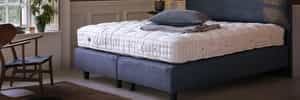
New York apartments rarely arrive with standard dimensions. Pre-war layouts, odd ceiling heights, and non-standard bed frames turn mattress shopping into a puzzle. Vispring solves that by offering true bespoke sizes, any length or width you need, so the bed fits the room and not the other way around. Couples can choose dual-comfort split firmness, letting each side of a king carry a different tension to end the nightly debate. Four tension levels (soft, medium, firm, extra-firm) are available, and you can adjust that tension within the first few months if needed, as covered by the Comfort Promise. Beyond the core, you can select upholstery fabric, divan height, and edge type, allowing the mattress to blend seamlessly with existing décor. In a city where space is at a premium, this level of personalization is not luxury for luxury’s sake; it is practical engineering that adapts to your life.
Vispring NYC sits at 459 Broome Street in SoHo and is open 7 days a week. It is also available by appointment, signaling that a visit is a consultation and not a casual browse. Expert staff walk you through firmness gradations, material differences, and the myriad customization options, knowledge that simply cannot be conveyed through a webpage or a video. The tactile experience is stark: pressing your palm into a hand-nested pocket spring mattress reveals a responsive, lively feel that engineered foams cannot mimic. Many guests are surprised by how alive the surface feels, noting a subtle buoyancy that cradles rather than sinks. Treating the showroom as the first step in a decades-long relationship reframes the purchase: you are not just buying a mattress, you are beginning a partnership with a brand that will stand beside you for years to come. Even if you think you have decided, booking that appointment is strongly recommended; the difference between reading specs and feeling the bed in person is often the deciding factor. Understanding the financial side of that decision brings us to the numbers.
Wool and horsehair are hygroscopic fibers that pull moisture away from the skin, release it into the air, and help regulate temperature throughout the night. This natural wicking keeps the sleep surface drier than foam, which tends to trap heat and create a clammy feel. Vanadium pocket springs move independently, isolating motion so that a partner’s toss and turn barely registers on the other side. Lab tests show a significant reduction in disturbance compared with continuous-wire innersprings. Foam, by contrast, compresses unevenly over time, creating soft spots that undermine spinal alignment and increase pressure points.
Vispring’s open structure encourages a microclimate that actually improves with age, as the natural fibers settle into a resilient, breathable state. These biomechanical advantages explain why owners often report cooler, quieter, and more supportive sleep years after purchase. A concrete example comes from a SoHo designer who has lived with one for seven years.
Let’s talk numbers, because sophisticated readers deserve honest calculation.
A mainstream foam mattress purchased for $2,000 and replaced every seven years will cost $8,571 over 30 years, excluding inflation, disposal fees, and the cumulative discomfort of sleeping on degrading support. The first mattress feels acceptable; the second develops body impressions; by the third and fourth replacements, you are experiencing the slow deterioration that foam delivers as a design feature.
Vispring’s expected lifespan runs 25 to 40 years with proper maintenance. A $10,000 Vispring purchased today and serving you for 30 years costs approximately $333 per year. A $2,000 foam mattress replaced four times over the same period costs approximately $286 per year. But that is just the purchase price. Add disposal fees, delivery charges, and the documented quality-of-life impact from sleep disruption, and the gap narrows significantly.
The calculation becomes more favorable when you account for what the mattress actually delivers. Quality sleep affects everything from cognitive function to immune response, from mood stability to relationship quality. The amortized cost of a bed that consistently provides restorative rest differs fundamentally from one that progressively undermines your sleep architecture.
For Manhattan buyers specifically, consider the apartment calculus. Many lease agreements prevent long-term commitment to furniture. But Vispring’s design philosophy means the mattress travels with you, literally. If you relocate to a different apartment, your bed comes with you, and it fits because you ordered it for your actual space and not an assumed standard.
The Comfort Promise and warranty together eliminate the primary risk of committing to a specific firmness level. You can test your choice, adjust within 90 days if needed, and know that decades of coverage protect your investment. This is not a gamble; it is a calculated commitment backed by structural guarantees.
The philosophical framing matters too. What we invest in reveals what we value. A Vispring purchase declares that sleep quality, material integrity, and environmental responsibility are worth prioritizing. It says you are done treating your bed as disposable furniture and ready to invest in the object that defines your nights for the next three decades.
Vispring is the last mattress you will ever buy. Not because it is the most expensive option on the market, but because it is the only one designed from inception to outlast every alternative. The combination of handcrafted construction, natural materials that improve with age, extreme customization for non-standard spaces, and warranty coverage that protects your investment for three decades, this is what distinguishes a lifetime purchase from a transaction.
Manhattan demands that you make every square foot, every dollar, every decision count. Your bedroom should be a sanctuary, and the mattress is its foundation. When you choose Vispring, you are not signaling luxury for its own sake. You are making a pragmatic decision that aligns with the city’s values: efficiency, quality, and refusal to accept compromise.
Visit the SoHo showroom and schedule a consultation. Feel what over a century of craftsmanship feels like beneath your body. Ask about customization for your specific space, about the Comfort Promise, about what it means to buy furniture that will outlast your current apartment, your current furniture, and possibly your current relationship with sleep itself. Your nights deserve the same consideration you give every other aspect of your Manhattan life. Invest accordingly. And behind that investment lies a simple, refined mechanism: the pocket spring.
The pocket spring dates back to 1857, but Vispring’s founder James Marshall refined the concept with vanadium-wrapped coils for first-class railway carriages, where silence and comfort were non-negotiable. When the company turned to domestic mattresses, those same exacting standards traveled with it: each spring remains individually wrapped, hand-nested, and responsive to every contour of the body. The approaching 125-year anniversary reflects a model of continuous refinement rather than trend-chasing; the design has been honed for generations of sleepers and not for a fleeting mass-market cycle. That heritage explains why a Vispring feels different. It was engineered to last, to breathe, and to support the sleeper night after night, year after year.
Several respected names compete in the premium space. Saatva offers a sturdy innerspring core but lacks hand-nesting and the ability to split firmness across a king. Casper and Purple rely heavily on engineered foams that compress and lose support within a few years, despite their initial pressure-relieving feel. Keetsa emphasizes eco-friendly materials yet provides limited customization and no hand-tufted construction. Avocado comes closest in its use of natural latex and organic wool, but it does not employ hand-nested pocket springs, split-firmness options, or the full suite of bespoke dimensions that Vispring offers. The fundamental divide lies in philosophy: mainstream brands optimize for price, convenience, and a short lifespan, while Vispring focuses on the mattress itself, its materials, its construction, its endurance. If short-term affordability and ease of delivery drive your decision, the mainstream options have merit. If you seek a bed that improves with age, that can be tailored to your exact space, and that carries a legacy of craft, Vispring stands alone.
Navigating a Manhattan move brings its own set of hurdles: narrow hallways, freight-elevator windows, building noise curfews, and limited loading dock access. Vispring’s white-glove service anticipates those challenges. Teams arrive with protective coveralls, maneuver the mattress through tight stairwells, position it in the room, remove your old bed, and arrange for eco-conscious disposal. Typical lead time runs two to three weeks from order, though bespoke sizes may add a week or two depending on the complexity of the cut. Costs generally fall between $150 and $300, scaling with building restrictions such as elevator availability or after-hours work permits. It is wise to confirm delivery partnerships at the SoHo showroom; many NYC luxury furniture specialists already work with Vispring and can smooth the final leg of the journey. In a city where every detail matters, the delivery experience becomes the final touch that matches the mattress’s own precision.