The wealthiest people you know aren't buying new things. They're keeping old ones.
Walk into a genuinely affluent home and you'll notice something unusual: almost nothing looks new. The leather sofa has softened over fifteen years. The dining table carries decades of small marks. The mattress, chosen carefully once, has stayed for twenty years.
These objects create a different relationship with ownership. They stop behaving like purchases. They become part of the architecture of daily life.
Not accidentally. Intentionally.
Because permanence signals discernment in a way trend participation never can.
Anyone can buy something expensive once. Keeping something for twenty years because it continues earning its place is a different kind of luxury entirely.
Part of what people are responding to is not just durability. It is relief.
Relief from endless decision-making. Relief from constant upgrading. Relief from living inside a permanent cycle of optimization.
There is comfort in knowing something is settled. That you chose well once, and do not need to revisit the decision every two years.
This is increasingly how affluent consumers think about luxury: not as accumulation, but as reduction. Fewer things. Better things. Things capable of staying.
That shift changes how homes feel. The most luxurious spaces today rarely feel crowded with purchases. They feel edited. Intentional. Calm.
Not because less money was spent. Because fewer compromises were made.
Most modern products are designed around cycles. New collections. Seasonal drops. Algorithmic trends. Annual upgrades disguised as innovation.
Furniture is replaced before it ages. Clothes are purchased for moments, not years. Even homes feel temporary, designed for resale photography, not living.
There is an entire economy built around keeping people slightly dissatisfied. Slightly ready for the next version.
Over time, this changes how people think about value. They stop asking “Will this last?” and start asking “What comes next?”
Which is precisely why permanence now feels luxurious.
You can see this shift across luxury categories. The brands gaining long-term cultural relevance are no longer speaking the language of optimization. They are speaking the language of longevity.
Patagonia promises to repair your jacket forever. Loro Piana speaks in decades, not seasons. Even automotive brands like Porsche emphasize that their cars appreciate rather than depreciate.
The conversation has shifted from “What does it do?” to “How long will I want to live with it?”
And that is a much harder question. Because permanence cannot be manufactured through branding alone. It has to be built into the object itself.
Real permanence is difficult. It requires craftsmanship. Better materials. Patience in construction. A willingness to prioritize longevity over speed.
Which is why genuinely permanent things have become rarer at the exact moment people want them most.
And perhaps that is the real reason permanence has become such a powerful luxury signal. Because in a culture built around disposability, keeping something beautiful for a very long time feels almost rebellious, especially when it continues to justify its place year after year.
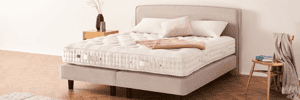
This is especially true with mattresses.
Most mattresses today are designed around first impressions. You lie down in a showroom for six minutes. It feels soft. Supportive. Impressive in an immediate, easy-to-understand way.
But sleep is not experienced in six minutes. It is experienced over years.
And the qualities that create lasting comfort are often quieter than the ones that sell quickly on a showroom floor: how consistently the support holds, how materials respond after years of use, whether the mattress adapts gradually to the body or breaks down unevenly over time.
A mattress is one of the few objects in a home that the body experiences every single day, without interruption. Which makes permanence matter even more.
Not aesthetic permanence. Physical permanence. The ability for something to continue performing long after the novelty of buying it disappears.
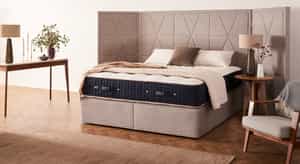
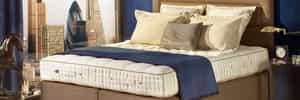
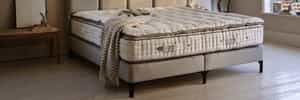
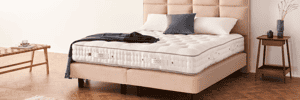
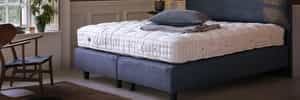
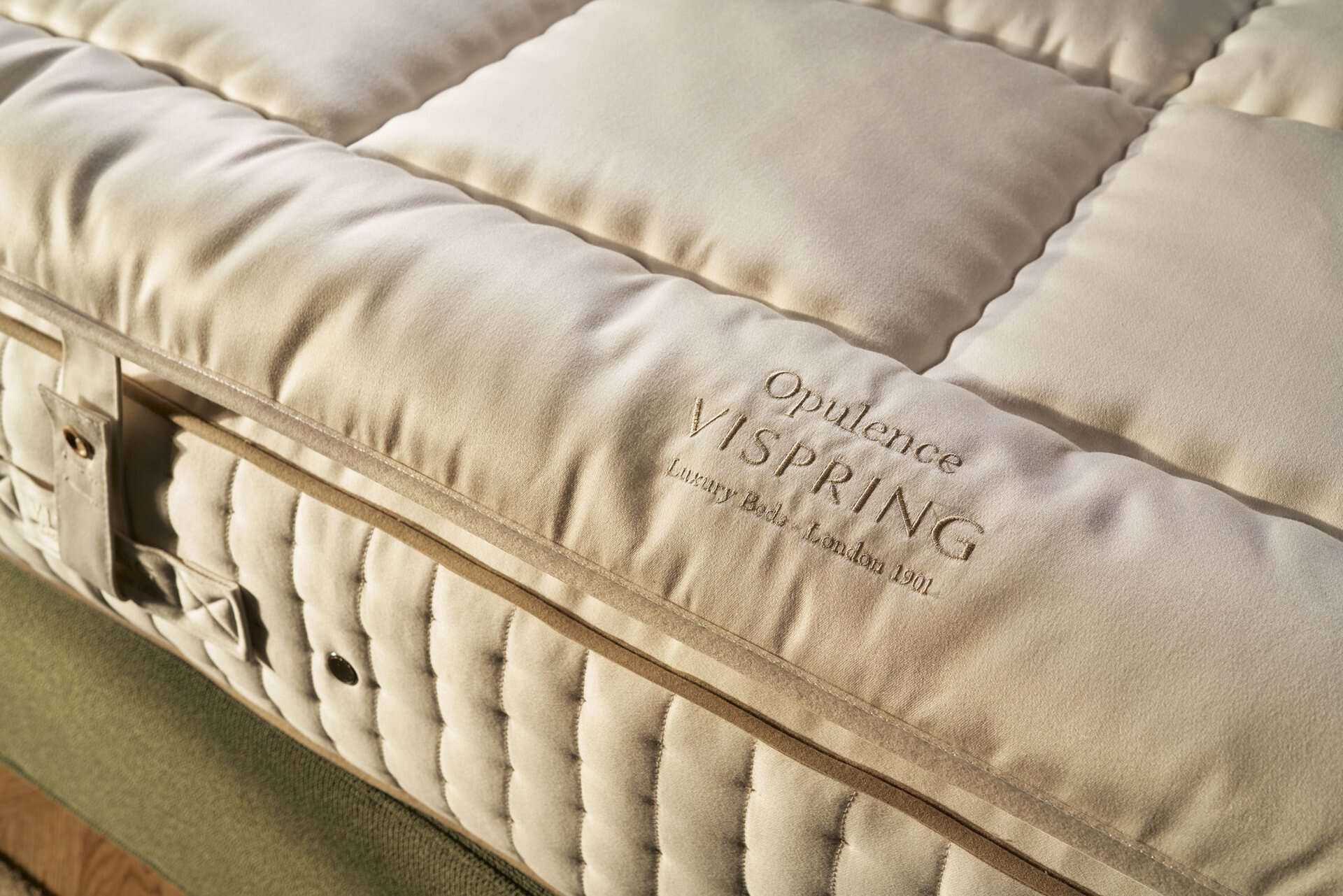
At Vispring, this philosophy isn’t theoretical. It’s structural.
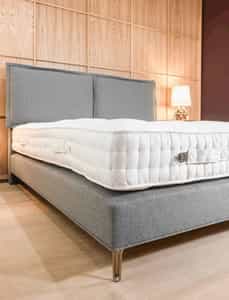
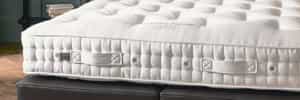
Every mattress is hand-nested by a single artisan in Plymouth, England, the same way they’ve been made since 1901. Not because heritage sells, but because some things can’t be rushed.
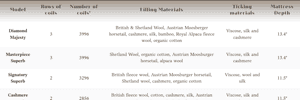
The pocket springs respond independently to every point of contact. Natural fibres—wool,
cotton, silk, horsehair, regulate temperature and adapt gradually to the body over years, not
months.
This isn’t designed for showroom appeal. It’s designed to remain.
Clients report sleeping on the same Vispring mattress for fifteen, twenty, even twenty-five years. Not because they can’t afford to replace it. Because they’ve never needed to.
A well-made mattress does not simply feel comfortable when you first lie down. It becomes familiar to the body. The support remains consistent. The experience becomes quieter, more effortless, more dependable.
You stop thinking about the mattress itself. Which, ironically, is usually the sign of a very good one.
And perhaps that is the real measure of permanence: not how impressive something feels at first, but how effortlessly it continues earning its place, night after night, year after year.
Experience the difference between temporary and permanent.
 (212) 792-7911459 Broome St, New York, NY1500 Lafayette Road, Portsmouth, NH