You’ve spent months choosing the right neighbourhood. Weeks comparing layouts. Days obsessing over crown moulding and natural light.
You designed the kitchen down to the millimetre, and arranged the living room with lighting, art, furniture – all carefully chosen, refined over time.
And then comes the bedroom. Often treated as an afterthought.
The mattress is usually decided in an hour. A quick visit to a store. A recommendation taken at face value. Or something ordered online because it seems convenient.
The Room That Gets the Least Attention
It is a strange imbalance.
The room where you spend the most uninterrupted hours is often the one given the least consideration.
Not out of neglect, but because it is not visible.
It is not where you entertain.
It is not where impressions are made.
So, it becomes functional.
A place to sleep, rather than a space designed for rest.
If you added up the hours, you would realize you spend more time in your bedroom than your kitchen and living room combined. It just does not feel that way.
A well-designed bedroom does not draw attention to itself.
It removes friction.
The temperature feels right without adjustment. The lighting settles the mind rather than stimulating it.
The bed supports the body without requiring you to find the right position.
It allows the body to do what it is meant to do – recover.
Most people do not think about their bedroom until something feels off.
Sleep becomes inconsistent.
Mornings feel heavier than they should.
Small discomforts begin to compound.
Nothing dramatic.
Just a quiet sense that rest is not as restorative as it could be.
In a city like New York, where the pace is constant and the margin for fatigue is low, that difference accumulates.
What Happens When You Ignore It
You wake up tired. You assume it is normal.
Your lower back feels stiff in the morning. You attribute it to your chair, or the way you sat the day before.
You wake during the night. You assume it is stress, the city, something external.
It rarely occurs that the surface you are sleeping on may be part of the problem – something chosen years ago and not thought about since.
Most people replace their mattress only when it is visibly worn.
Sagging in the middle. Loss of structure. The kind of deterioration that is impossible to ignore.
But a mattress does not go from perfect to unusable overnight.
It changes gradually.
And because the change is slow, your body adjusts with it.
You do not notice that you are sleeping slightly worse than you used to.
You assume it is age, workload, or simply part of living in New York.
Where the Bed Becomes the Center
This is where the role of the bed shifts.
Not as a piece of furniture.
But as the foundation of the room.
Everything else contributes to the environment. But the bed is where the experience actually happens.
A mattress that does not respond properly creates subtle tension.
Pressure points that require adjustment.
Support that feels slightly off.
It is rarely obvious in the moment. But it is felt over time.
A good mattress does not announce itself.
It does not make you think about it at all.
You lie down and your body releases.
You do not spend time shifting to get comfortable.
You do not wake during the night to adjust.
You simply sleep and, in the morning, you wake up ready.
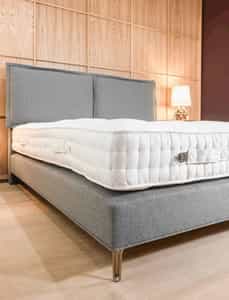
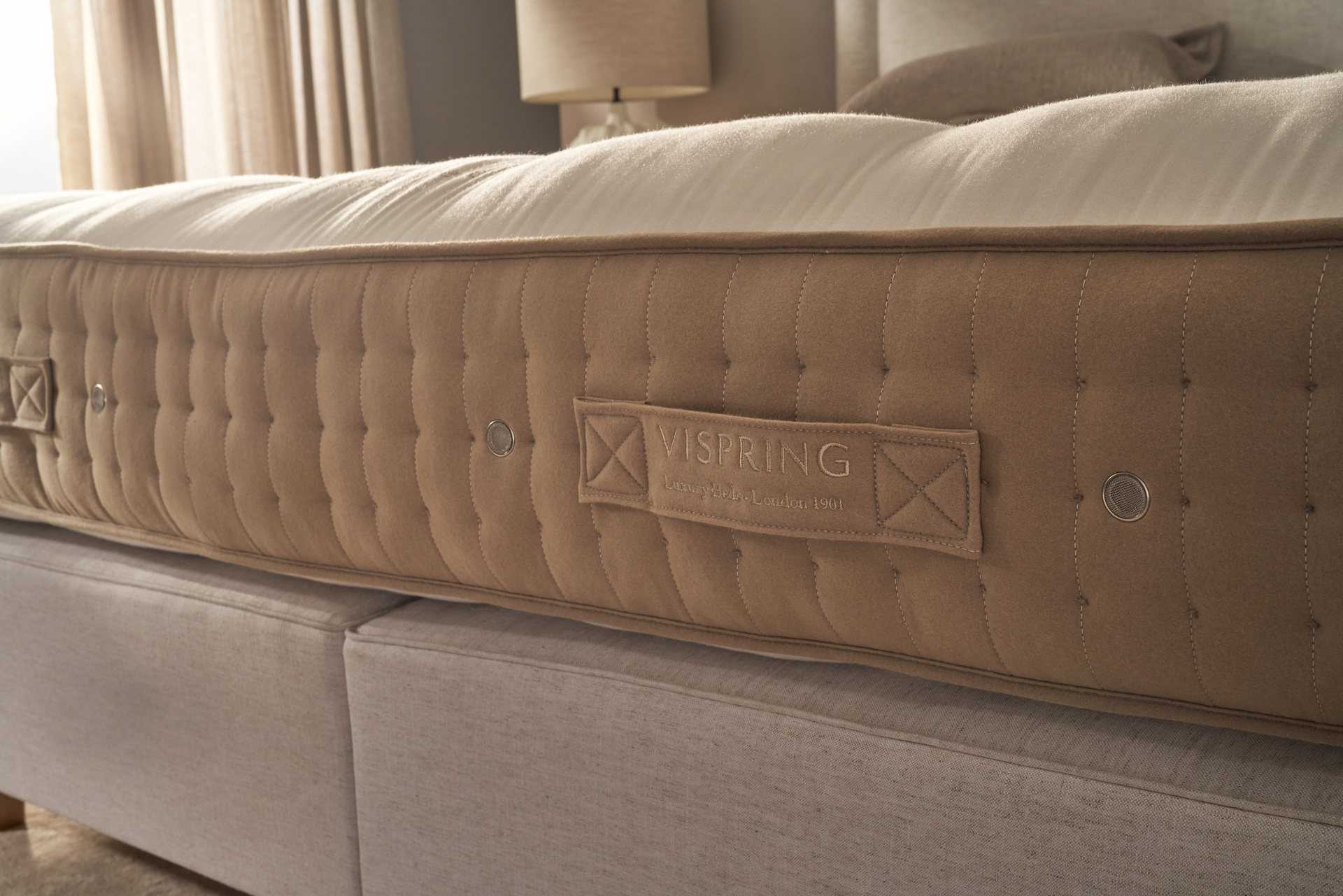
This is what a Vispring mattress is designed to do.
Not through a single feature, but through how everything works together – hand-nested pocket springs that respond independently, and natural materials such as wool, horsehair, and cotton that allow for breathability and consistency over time.
These are not differences you immediately see.
They are differences you begin to feel, gradually.
A mattress is not an appliance. It is not a rational purchase. It is a personal one, something that reveals its value over time, in ways that are difficult to measure on a showroom floor.
What Changes When You Pay Attention
In a city where everything competes for attention, the bedroom is one of the few spaces that should not.
It should not stimulate. It should not demand.
It should allow you to step out of the pace of the day, without effort.
That requires intention, not in how it looks, but in how it functions.
The first thing people notice when they switch to a well-made mattress is not that it feels softer or firmer.
It is that they stop noticing the mattress at all.
They lie down and fall asleep.
They do not wake to adjust.
They do not get out of bed feeling stiff.
The bedroom stops being something they tolerate, and becomes something they rely on.
Sleep is not something you add to the day.
It is what allows the rest of it to work.
The Investment No One Regrets
A Vispring mattress costs more than most.
That part is obvious.
What is less often considered is how much time is actually spent on it.
Night after night.
Year after year.
Few things in a home are used as consistently, or as personally.
Over time, the materials begin to settle and respond to the body, not in a way that is immediately noticeable, but in how consistent the experience becomes.
The support feels familiar.
The surface feels considered.
It is not something you think about in the moment.
But it is something you notice over time.
The Quiet Priority
For most people, the shift happens slowly. They begin to notice how they feel in the morning.
How easily sleep comes. How consistent that experience becomes.
And with that, the bedroom changes in importance.
Not as a design project.
But as something more foundational.
Something that quietly supports everything else.
The Room That Earns Its Rent
Your bedroom is one of the few spaces in your apartment that directly affects how you feel the next day.
It is not decorative.
It is not aspirational.
It is foundational.
And yet it is often the room people furnish last, think about least, and revisit only when necessary. If you calculated the return on investment – hours used, impact on daily performance, longevity of the product, your bedroom should be the first room you get right, not the last.
Because the most expensive apartment in Manhattan is still a bad deal if you’re not sleeping well in it.
It is this kind of quiet consistency that defines a Vispring.
 (212) 792-7911459 Broome St, New York, NY1500 Lafayette Road, Portsmouth, NH